

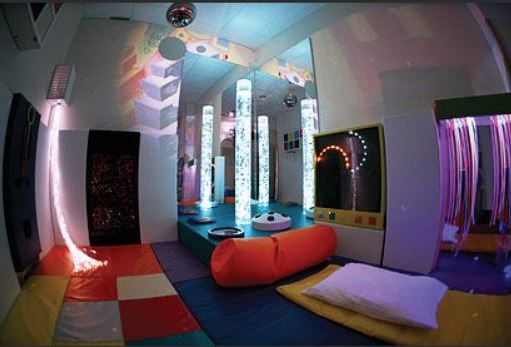
Welcoming 2026: Why Mobile Sensory Spaces Matter More Than Ever
Jan 29 , 2026
0 Comments
As we welcome 2026, the team at Disability Equip Online (DEO) is excited to begin the year by continuing a conversation that matters deeply to us: how we create spaces that truly support inclusion.
Inclusion isn’t static.
And it certainly isn’t one-size-fits-all.
Every person is different. Every environment is different. And often, needs can change from moment to moment — sometimes within the same day. That’s where Mobile Sensory Spaces play a powerful role.
Inclusion Looks Different in Every Space
Across schools, therapy settings, workplaces, community hubs and homes, we see a wide range of challenges:
-
Some environments are built around fixed layouts, where space is limited and permanent changes aren’t possible.
-
Other settings need to reconfigure quickly — a quiet space for regulation one moment, a collaborative or learning space the next.
-
And many organisations need solutions that work across multiple rooms or locations, without duplicating equipment or cost.
In these situations, inclusion depends not on a single room — but on flexibility.
The Power of Mobile Sensory Spaces
Mobile sensory solutions allow sensory, wellbeing and regulation supports to move where they’re needed most. This simple shift changes everything.
When sensory equipment is mobile, inclusion becomes:
-
Practical — supports are available without major renovations or permanent room allocations
-
Responsive — spaces can adapt as needs change
-
Sustainable — equipment can be shared, reused and reconfigured
-
Person-centred — people are supported where they are, not where the space dictates
From mobile calm-down trolleys and movable soft seating to portable sensory tools and adaptable partitions, mobile solutions meet people in real-world conditions — not idealised ones.
Designed for Real Life
At DEO, we see mobile sensory spaces supporting:
-
Students who need quick access to regulation supports without leaving their learning environment
-
Therapists who move between rooms and require consistency for their clients
-
Workplaces aiming to support neurodivergent staff without dedicating a single fixed room
-
Families creating flexible sensory support at home, especially where space is shared
These solutions allow environments to evolve alongside the people who use them.
Inclusion That Moves With You
True inclusion isn’t about asking people to fit into spaces that weren’t designed for them.
It’s about shaping spaces — and supports — around people.
As we step into 2026, DEO remains committed to helping schools, organisations and families create inclusive environments that are flexible, thoughtful and grounded in lived experience.
Because when inclusion can move, adapt and respond —
it works better for everyone.